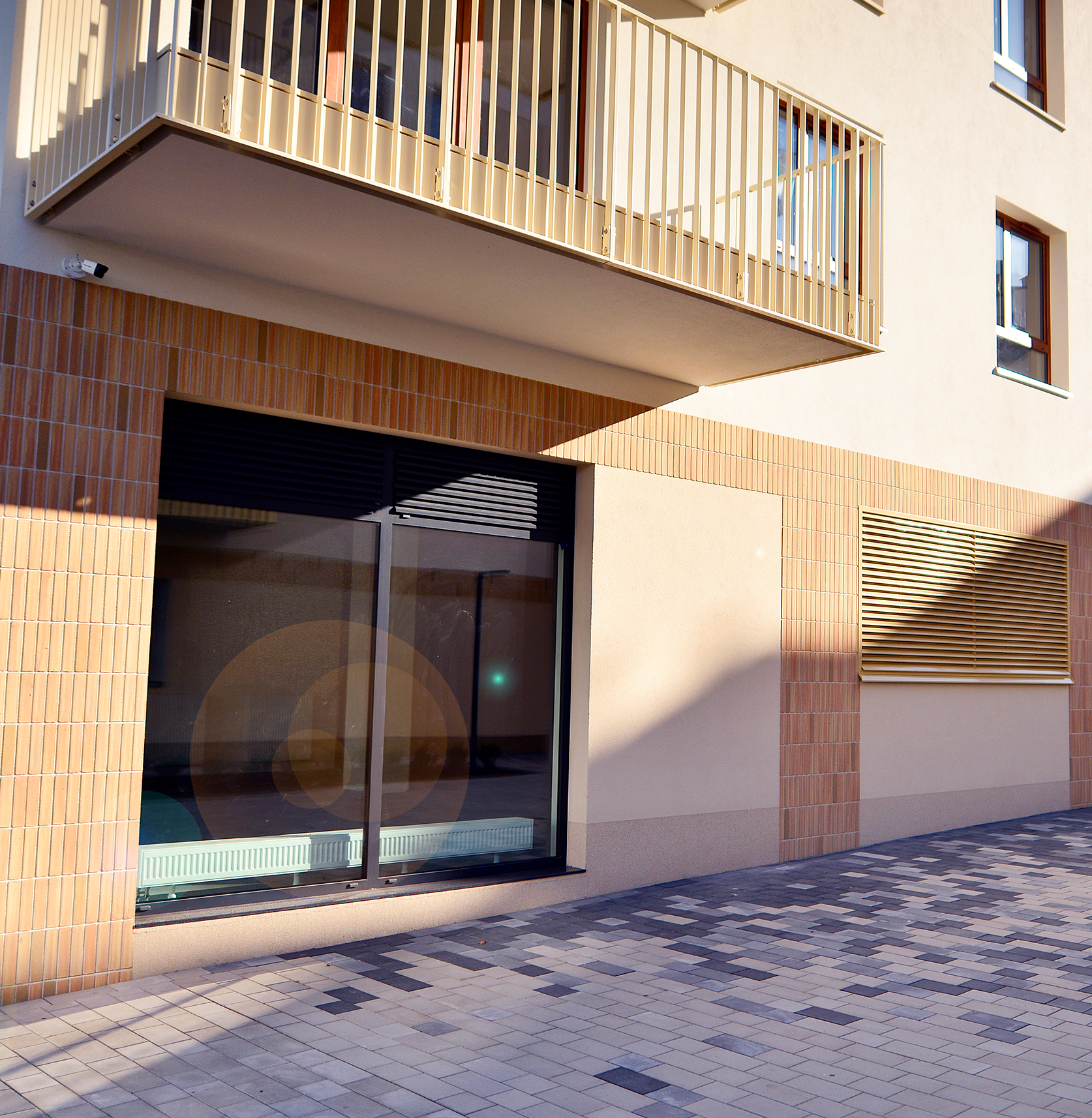
Converting commercial and tertiary real estate (such as retail units, offices, or warehouses) into residential properties has established itself as one of the most lucrative yield strategies in the Spanish real estate market. However, for a foreign buyer or non-resident investor, executing a change of use of commercial and tertiary properties to residential in Spain requires navigating local municipal codes, planning regulations, and specific cross-border legal requirements.
Acquiring a commercial asset without conducting a prior legal and technical audit (Real Estate Due Diligence) can result in rejected building permits, banking freezes under European Anti-Money Laundering frameworks, or the eventual inability to secure a Certificate of Occupancy and complete Land Registry enrollment.
The change of use of commercial and tertiary properties to residential in Spain is the administrative and legal procedure required to reclassify a non-residential asset—such as a retail unit, office, or warehouse—into a legally recognized dwelling. To achieve residential status, the property must satisfy municipal planning regulations (PGOU), comply with the Spanish Building Code (CTE), and secure both a Change of Use Planning Permit and a Certificate of Occupancy.
Info
ToggleMandatory Legal Requirements for Foreign Investors in Spain
Before initiating an asset search or committing funds through a reservation agreement, foreign investors must fulfill three essential legal formalities:
- Obtaining a Spanish Tax Identification Number (NIE): Mandatory for executing the public purchase deed before a Spanish notary, settling applicable transaction taxes, registering property ownership at the Land Registry, and setting up utility contracts.
- Opening a Spanish Bank Account: Essential for issuing bank drafts to the seller, settling local taxes, managing ongoing property expenses, and verifying source-of-funds compliance under EU KYC/AML (Know Your Customer / Anti-Money Laundering) regulations.
- Representation via Power of Attorney (POA): Authorizes your legal counsel to apply for your NIE, open bank accounts, secure municipal permits, and complete the notarized purchase on your behalf, enabling you to manage the entire investment remotely without traveling to Spain.
Converting Commercial Property into Residential in Spain: Is It Legal?
Yes, it is 100% legal across Spain, provided the asset strictly satisfies a three-tier regulatory framework: the Municipal General Land-Use Plan (PGOU), the habitability standards of the Spanish Building Code (CTE), and the registered bylaws of the building’s Community of Owners.
Despite its legal feasibility, a conversion is never an automatic process. It requires securing an official Change of Use Planning Permit issued by the Municipal Urban Planning Department, followed by the delivery of a Certificate of Occupancy (Licencia de Primera Ocupación or Cédula de Habitabilidad). Without these administrative titles, the space retains its commercial or tertiary classification for all legal, tax, and land registry purposes.
| Common Investor Myth | Legal Reality in the Spanish Real Estate Market |
|---|---|
| “Any street-level retail space can easily be converted into an apartment.” | False. Technical and legal feasibility depends strictly on land classification, maximum residential density caps per plot, and municipal zoning ordinances. |
| “The Homeowners’ Association (HOA) can freely veto a change of use to residential.” | False. Unless the building’s Community Statutes registered at the Land Registry explicitly prohibit residential conversions, the HOA cannot arbitrarily object. |
| “This real estate investment automatically grants a Spanish residency visa.” | False. The real estate Golden Visa has been repealed. Property ownership provides clear title, but residency requires independent immigration routes (such as the Non-Lucrative Visa or Digital Nomad Visa). |
Urban Planning Due Diligence for Property Conversions
Before transferring earnest money or signing a binding deposit contract (Contrato de Arras), conducting a thorough urban planning and legal due diligence is critical. This assessment prevents purchasing non-convertible assets and safeguards investor capital by verifying essential technical and regulatory parameters:
- PGOU Compatibility Report: Requests official confirmation from Town Hall that the local land-use plan allows residential reclassification on the property’s floor level and that the maximum residential density threshold for the plot has not been reached.
- Minimum Usable Area and Ceiling Height Checks: Verifies that the property meets local habitability standards regarding minimum usable floor space (typically between 38 m² and 45 m²) and clear ceiling height (2.50 meters in main living areas and 2.20 meters in hallways and bathrooms).
- Facade, Natural Light, and Ventilation Inspection: Confirms the asset features the minimum facade length facing the street or inner courtyard required by the Building Code (CTE) to guarantee direct natural lighting and ventilation without encroaching on neighboring easements.
- Accessibility Compliance: Evaluates whether an independent street access can be established—or the main building entrance adapted—to comply with local regulations for individuals with reduced mobility.
- Utility Infrastructure and Exhaust Duct Feasibility: Assesses direct access to the public sewer network and the technical feasibility of installing compliant kitchen smoke extraction ducts and ventilation shafts according to building codes.
Pre-Purchase Legal Safeguards: The Avanza+ Service by Corelex Global
To prevent committing capital prior to confirming the true planning feasibility of your residential conversion project, Corelex Global has developed the Avanza Service—a strategic legal solution engineered specifically for foreign buyers and international real estate investors.
Through Avanza by Corelex Global, our legal team takes command of preliminary negotiations to ensure every euro invested is fully protected from day one:
Pre-Acquisition Legal and Urban Planning Audit
We review Land Registry title deeds, outstanding encumbrances, existing licenses, and PGOU land-use compatibility before you execute any payments.
Drafting and Negotiating Protective Contingency Clauses
We legally condition your deposit or earnest money release (Contrato de Arras) on obtaining favorable municipal planning reports and technical conversion approvals.
Comprehensive Legal Representation
We manage all communications with real estate agencies, sellers, and municipal planning authorities, allowing you to secure property reservations with complete legal certainty from abroad.
Do not take unnecessary risks in the early stages of your transaction. With Avanza+, you gain the legal certainty required to transform commercial premises into highly profitable residential assets in Spain.
Eligible Property Types for Residential Conversion in Spain
The strategy of reclassifying non-residential assets into residential real estate extends beyond traditional retail space. The Spanish real estate market offers several property types with strong potential for executing a change of use to residential, creating lucrative yield opportunities for private investors, Family Offices, and investment funds:
Conversion of street-level retail units to residential apartments
This is the most sought-after option for small and mid-sized private investors. Street-level units usually benefit from direct public access, which simplifies compliance with mobility and accessibility codes. The primary legal hurdle when converting retail spaces involves securing street-facing privacy, meeting indoor light-to-floor ventilation ratios, and obtaining technical approval for kitchen exhaust shafts and plumbing connections.
Conversion of mid-floor office spaces to residential units
Typically located on first floors or intermediate levels of mixed-use buildings. Office spaces offer generous floor plates, large windows, and high ceiling clearances ideal for luxury apartments or multi-unit subdivisions. For these assets, the key legal factor involves verifying the capacity of shared building amenities (elevators, main entryways), municipal residential density limits, and the absence of prohibitions within the Community Statutes.
Conversion of entire commercial buildings to residential housing
An institutional-grade asset class for private equity funds and Family Offices seeking scale through Build-to-Rent or unit-sales models. Acquiring a full commercial building for residential conversion eliminates disputes with existing Homeowners’ Associations (HOA) and streamlines municipal building permit applications. Legal due diligence centers on urban land reclassification and overall compliance with national Building Code (CTE) safety, fire evacuation, and structural requirements.
Conversion of industrial warehouses to residential lofts
Ideal spaces for creating high-end design lofts or unique residential developments. These assets feature open-plan layouts and vaulted ceilings. The critical element in due diligence before converting a warehouse or storage unit is confirming that the land is not zoned exclusively for heavy industrial use in the local PGOU (which would block residential use) and ruling out environmental liabilities from past commercial activities.
Conversion of mezzanines and semi-basements to housing
Higher-risk technical assets requiring meticulous planning inspections. While acquisition costs are significantly lower, municipal ordinances enforce strict limitations regarding floor elevations relative to sidewalk levels, window heights, and minimum natural light required for legal habitability. Conversions are only legally viable if the architectural configuration satisfies municipal habitability standards.
Step-by-Step Legal Roadmap for International Investors
Once a viable commercial property is identified, transaction success relies on executing an error-free administrative and legal roadmap. In the Spanish real estate market, every phase of a change of use project demands tight coordination across planning checks, notarization, and immigration procedures to ensure your capital is secured with total legal certainty.
Granting Power of Attorney and Securing your NIE
The process begins by establishing legal capacity to operate in Spain. Through a notarized Power of Attorney (POA), you empower your legal team to act on your behalf. This enables counsel to secure your Spanish Tax Identification Number (NIE) and set up a local bank account under European Anti-Money Laundering (KYC/AML) regulations, allowing you to manage the transaction remotely without traveling to Spain.
Planning Due Diligence, Registry Audits, and Deposit Agreements
Before transferring earnest money or deposits, your legal team conducts a thorough property audit. An official Land Registry excerpt (Nota Simple) is obtained to confirm clear title free of encumbrances, mortgages, or tax claims, alongside formal land-use compatibility checks under the municipal PGOU. Upon validation, a deposit contract (Contrato de Arras) is drafted with protective contingency clauses tying the purchase to securing required permits.
Architectural Project for Change of Use
A licensed Spanish architect drafts the official Technical Project for Change of Use and Refurbishment. This dossier must strictly comply with national Building Code (CTE) standards and local habitability ordinances, demonstrating compliance regarding minimum usable floor space, ceiling clearance, natural light and ventilation, and accessibility requirements.
Municipal Permitting and Construction Execution
The architectural project is submitted to the Municipal Urban Planning Department to apply for the required Building Permit (or process a Responsible Declaration, depending on local planning rules). Upon administrative approval, contractors execute the renovation works under certified technical supervision.
Certificate of Occupancy and Public Deed Execution
Following construction completion, an official Certificate of End of Works is filed, triggering municipal inspections to grant the Certificate of Occupancy (Licencia de Primera Ocupación or Cédula de Habitabilidad). Armed with these approvals, legal counsel appears before a Spanish notary to execute the Public Deed of Change of Use, legally updating the asset’s description and classification.
Land Registry Inscription and Cadastral Reclassification
The final stage involves settling applicable transaction taxes and submitting the notarized deed to the Land Registry for formal entry. Concurrently, filings are submitted to the General Directorate for Cadastre to officially update the asset’s status from commercial to residential and adjust its cadastral tax valuation.
Tax Structure for Property Conversions in Spain
The tax treatment of a property conversion project varies depending on whether the asset is acquired by an individual investor or a corporate entity (Spanish Sociedad Limitada):
| Tax Category | Applicable Tax Rate | Legal and Tax Considerations |
|---|---|---|
| ITP or VAT (Property Transfer Tax / Value Added Tax) | 6% – 11% (ITP) or 21% (VAT) | Resale commercial properties are subject to Property Transfer Tax (ITP) set by Autonomous Regions. In corporate transactions between companies, buyers may apply for a VAT exemption renunciation to opt into VAT instead. |
| ICIO (Municipal Construction Tax) | 2% – 4% | Municipal tax levied directly on the total material execution budget (PEM) of the refurbishment works required for residential adaptation. |
| IRNR / Corporate Tax (Rental Income Taxation) | 19% (EU / EEA residents) 24% (Non-EU residents) | Taxation applied to net rental income generated by non-resident investors under Non-Resident Income Tax (IRNR) or Corporate Tax frameworks. |
Real Estate Lawyers Specialized in Property Conversions in Spain
Executing a property conversion project from abroad requires seamless legal and institutional coordination. As lawyers specializing in Spanish real estate and planning law, we handle the comprehensive legal management of your project: performing initial planning due diligence against the local land-use plan (PGOU) to confirm asset feasibility, drafting deposit agreements contingent upon license approval, and arranging notarized Power of Attorney (POA) to secure your tax ID (NIE) and set up a local bank account without requiring travel to Spain.
Protect the technical, administrative, and tax viability of your investment alongside a team of Spanish real estate lawyers specialized in commercial-to-residential property conversions.
Schedule a strategic consultation with our legal team to verify the safety of your project before committing your capital.